
Cat Matting: Causes, Health Risks, and How to Prevent It
Understanding Cat Matting: Causes, Effects, and Prevention
Matting is one of the most common and misunderstood coat issues we see as cat groomers. Whether your cat has a short coat, long coat, or anything in between, matting can happen to anyone. It’s not always a reflection of neglect or poor care. Understanding what causes matting, why it matters, and how to prevent it can make a huge difference in your cat’s comfort and overall health.
What Is Matting?
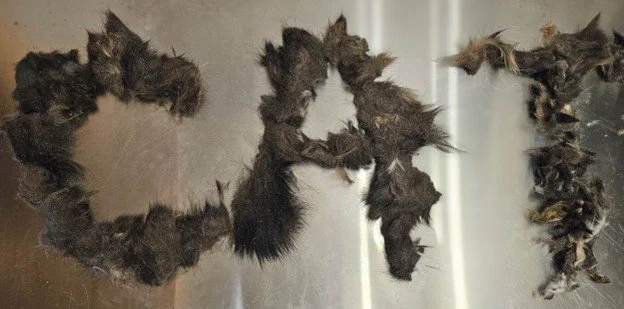
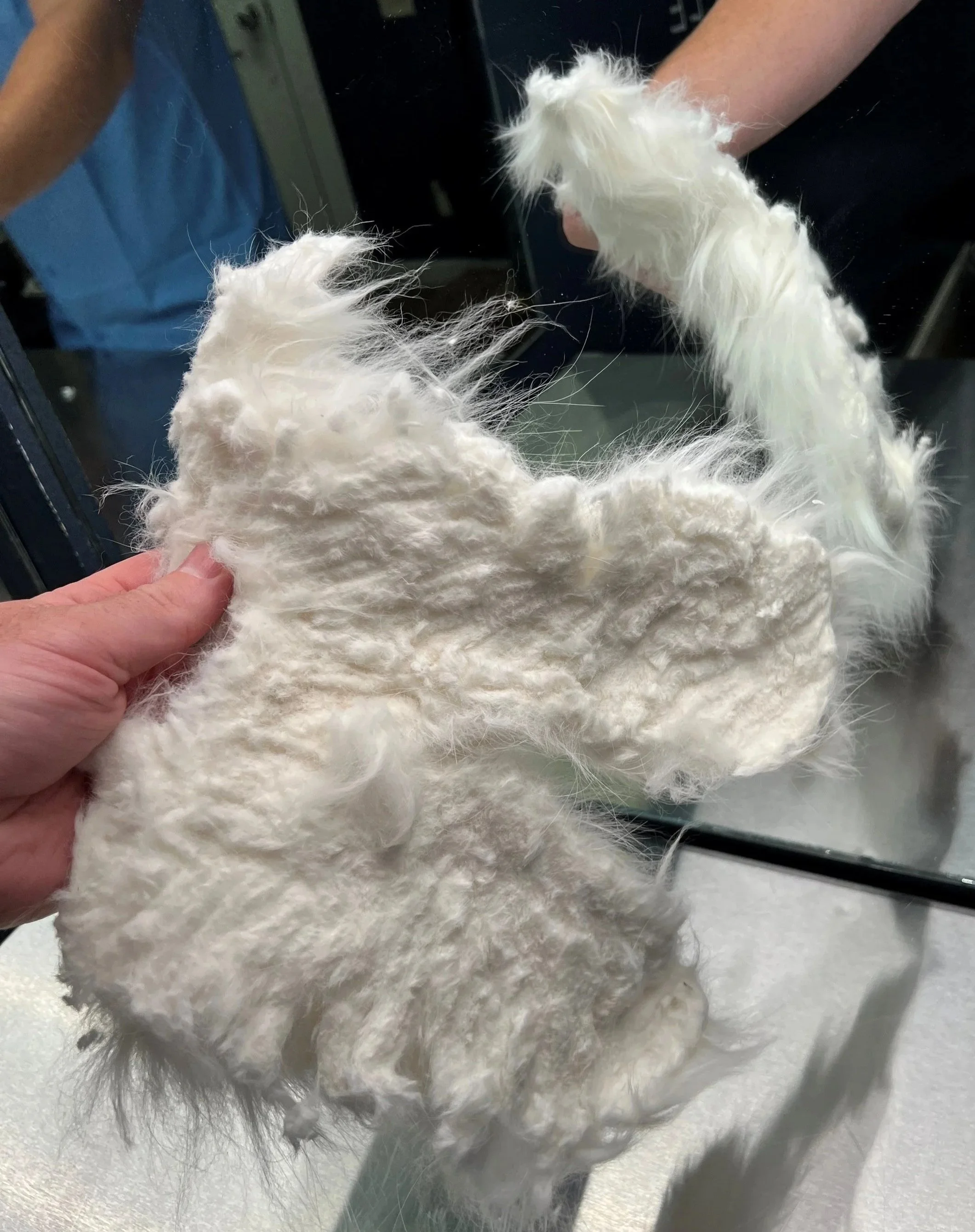
A mat is a tightly tangled clump of hair that forms when loose fur becomes interwoven with surrounding hair or debris. Unlike simple knots, mats cannot be brushed out easily without causing discomfort or damage to the skin. Over time, mats become denser and tighter, often pulling on the skin underneath.
Mats can form anywhere, but the most common areas include under the chin, in the armpits, along the belly, and around the hind end. These are areas with high friction, moisture, or increased movement.
Causes of Matting in Cats
1. Saliva and Moisture
When cats “groom” themselves, saliva coats the hair. While grooming is healthy, saliva causes hair strands to stick together and deposits protein into the coat. In a house cat, grooming distributes oils through the coat but does nothing to prevent or remove mats and tangles. Over time, repeated licking can turn slightly clumped hair into solid mats.
Moisture from drool, water bowls, or litter box accidents can accelerate this process. Another culprit is improper bathing. Improper products, drying techniques, or leftover product residue can very quickly form mats.
2. Friction
Constant movement and rubbing create friction that encourages matting. Collars, sweaters, bedding, and even the way a cat lies down can contribute. Areas where legs rub against the body or where the chin meets the chest are particularly prone.
Ever seen your cat enjoy a good back scratch on the rug? The friction and static from rubbing can quickly turn a funny hair day into painful matting.
3. Infrequent or Improper Combing
Not all combs are equal. We recommend the Chris Christensen Buttercomb #000 for all breeds. While it seems like a small distinction, inferior combs often glide right past mats.
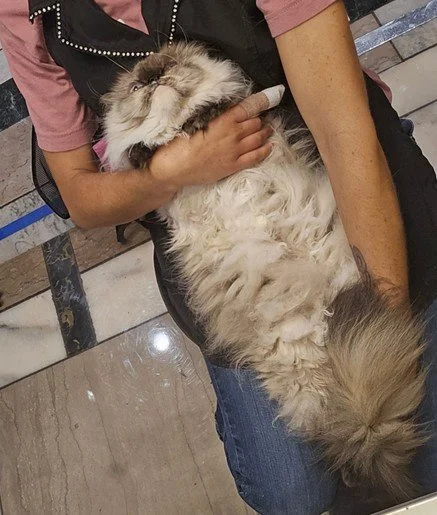
There is nothing worse than having to tell someone who combs every day that their cat has to be shaved due to matting. Using the wrong tools can leave the undercoat untouched, which is where mats often start. Most matting starts from the undercarriage and spiderwebs upward. If the belly isn’t combed, mats may spread through the undercoat unnoticed.
4. Shedding and Loose Undercoat
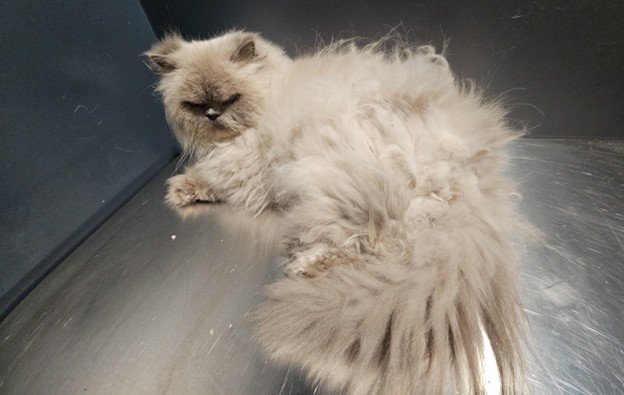
Cats continuously shed hair, even if it isn’t always obvious. Loose fur that isn’t removed through combing and bathing can twist together and form mats.
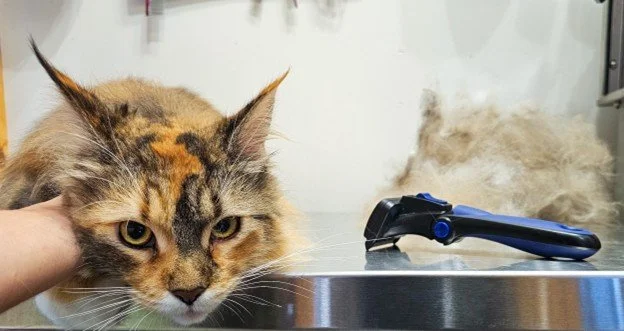
This photo shows a Furminator-style tool. While very useful, it can cause injury with improper usage.
5. Coat Type
Long-haired cats are more obvious candidates for matting, but short-haired cats are not immune. Cats with dense undercoats or fine, cottony hair mat very easily, regardless of length.
Breeds such as Ragdolls, Persians, Exotics, and Maine Coons are more prone to matting due to the length and density of their coats. Breeds with these coat types will typically require much more frequent grooming than their less fluffy counterparts.
6. Age, Weight, and Health
Senior cats, overweight cats, and cats with arthritis or other medical conditions often struggle to groom themselves thoroughly. Reduced mobility means certain areas get missed, resulting in more saliva deposited in some areas and oils not being spread to others. These cats typically have large amounts of dander and debris in the coat.
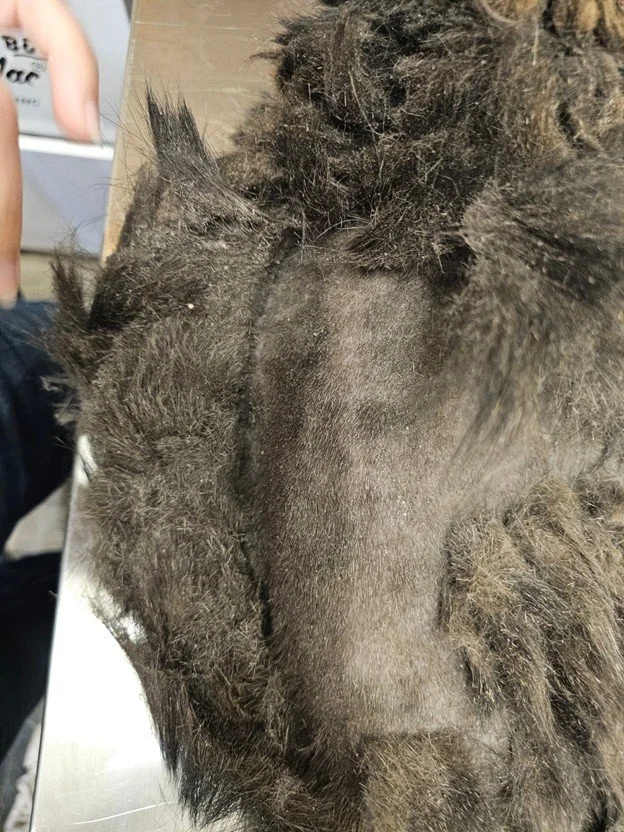
7. Improper Removal of Previous Matting
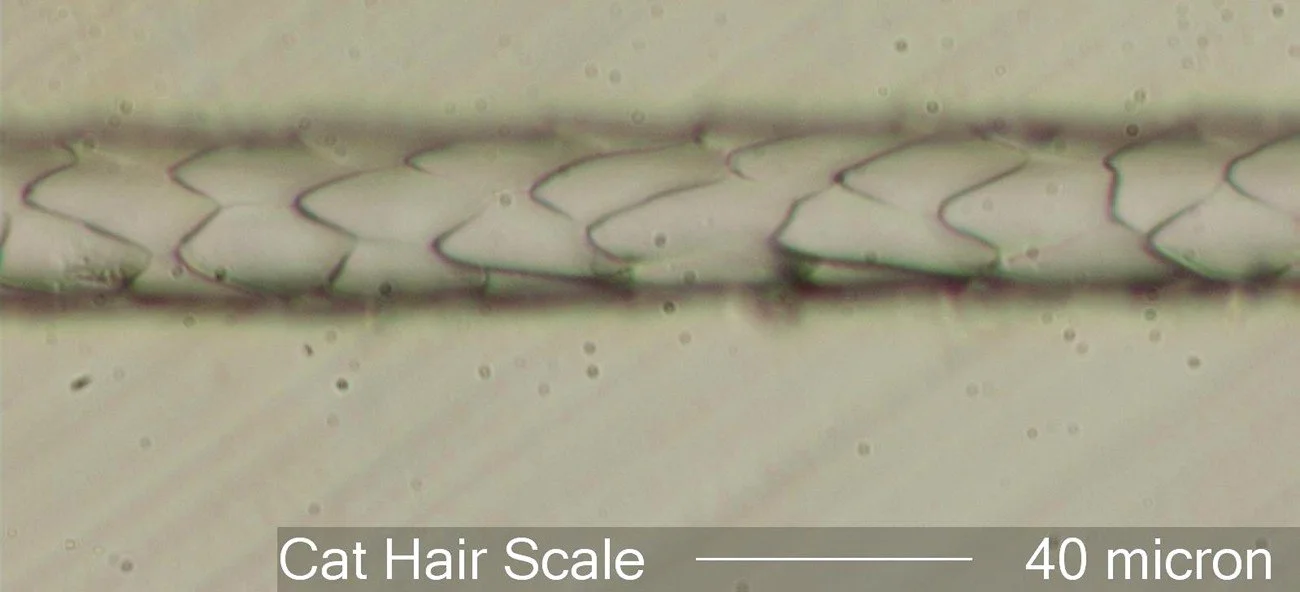
Spot shaving or excessive dematting by combing can damage the hair shaft and cuticle. Cat hair has barbed cuticles along the outside of the hair shaft. While removing small bits of matting may alleviate the immediate problem, the matting will often be much worse at the next grooming session.
Effects of Matting
Matting is more than a cosmetic issue. Left unaddressed, it can seriously impact a cat’s comfort and health.
1. Skin Irritation and Pain
Mats pull tightly on the skin, causing constant tension. This can lead to redness, inflammation, bruising, open wounds, and pain — especially when the cat moves.
2. Restricted Airflow to the Skin
Matted hair traps moisture, heat, and debris against the skin. This creates the perfect environment for bacterial and fungal infections. If skin issues are discovered while removing matted hair, service will be discontinued to ensure there are no contagions, reducing the risk of exposure to our staff and other cats in our care.
3. Hidden Wounds and Parasites
Mats can conceal cuts, sores, moles, or fleas, allowing problems to worsen before they’re noticed.
4. Reduced Mobility
Severe matting around the legs, belly, or armpits can restrict movement, making it uncomfortable or even painful for a cat to walk, jump, or stretch. While extremely uncommon in owned pets, matting can cut off circulation to areas such as tails and legs, resulting in tissue death or amputation.
5. Behavioral Changes
Cats in discomfort may become withdrawn, irritable, or aggressive when touched. Some may attempt to rip the mats out with their teeth, causing bald patches and wounds.
Why Shaving Is Sometimes Necessary
Once a mat has tightened close to the skin, brushing it out is often painful and unsafe. Attempting to cut mats out at home with scissors is extremely dangerous, as cat skin is thin and easily cut.
In these cases, professional grooming is the safest and most humane option. While shaving can be emotional for owners, it provides immediate relief and allows the skin to heal. Not all matting requires a lion cut. Our professional groomers are trained in proper mat removal and can evaluate in person what solution is best for each individual cat.
Prevention Is the Best Solution
Preventing matting is far easier than fixing it.
Preventing Matting in Cats
1. Regular Professional Grooming
Routine grooming appointments help remove loose undercoat and debris before mats form and allow professionals to catch problem areas early.
2. Proper At-Home Coat Care
Use proper tools. We do not recommend attempting to bathe your cat at home between grooming sessions due to the high risk of injury and the high potential for leftover residue in the coat, which can lead to debris accumulation and skin irritation.
Focus on high-risk areas and ensure you’re reaching the undercoat, not just the surface. The belly and armpits should always receive the most attention. If your cat is fractious during belly combing, we are always happy to demonstrate safer, injury-free techniques.
3. Short, Frequent Sessions
Cats unaccustomed to combing tolerate brief grooming sessions better than long ones. Even a few minutes several times a week can make a big difference. Be sure to praise and reward with lots of yummy treats.
Never push your cat through too forceful of an experience. Not only could this lead to injury, but it will also make your cat fearful of grooming and harder to groom in the future.
4. Monitor Changes
Pay attention to changes in your cat’s grooming habits, weight, or mobility. These can be early signs that they need extra grooming support — or a veterinary visit to address underlying issues. A dull or lifeless coat is often one of the first signs of a health problem.
5. Don’t Wait!
If you feel a small tangle starting, reach out immediately. Mats progress quickly and are much easier to manage early. Please do not attempt to remove mats with scissors or shears. Cuts like the one shown below are very common and often require medical intervention.
Final Thoughts
Matting is common, preventable, and manageable with the right approach. Understanding why mats form and taking proactive steps to prevent them will keep your cat more comfortable, healthier, and happier. If you’re ever unsure, consulting a professional groomer can save your cat from unnecessary pain — and save you from much bigger grooming challenges down the road.